Blog
Pasteurized Milk vs Loose Milk in Lahore: Which Is Safer for Your Family?

Most families in Lahore still buy loose milk (khula doodh) from a gawala or a local shop. It is convenient and cheap, but you rarely know which animal it came from, how it was stored, or whether water or powder was added on the way. Pasteurized milk from a known farm takes those questions away.
What does “pasteurized” actually mean?
Pasteurization is a simple heat treatment: milk is heated to a set temperature for a short time and then cooled quickly. It is used by dairies around the world to make milk safe for everyday drinking while keeping its natural taste. You still boil it for tea if you like – but you start with milk that has already been handled hygienically.
Loose milk vs pasteurized farm milk
- Source: loose milk is often collected from many animals and middlemen. Khalis 365 milk comes from our own American Friesian cows at our Kasur farm.
- Purity: with loose milk you cannot check for added water. Our 1 litre bottle and pouch have a single ingredient: fresh cow milk.
- Hygiene: loose milk travels in open containers. Our milk is pasteurized and sealed.
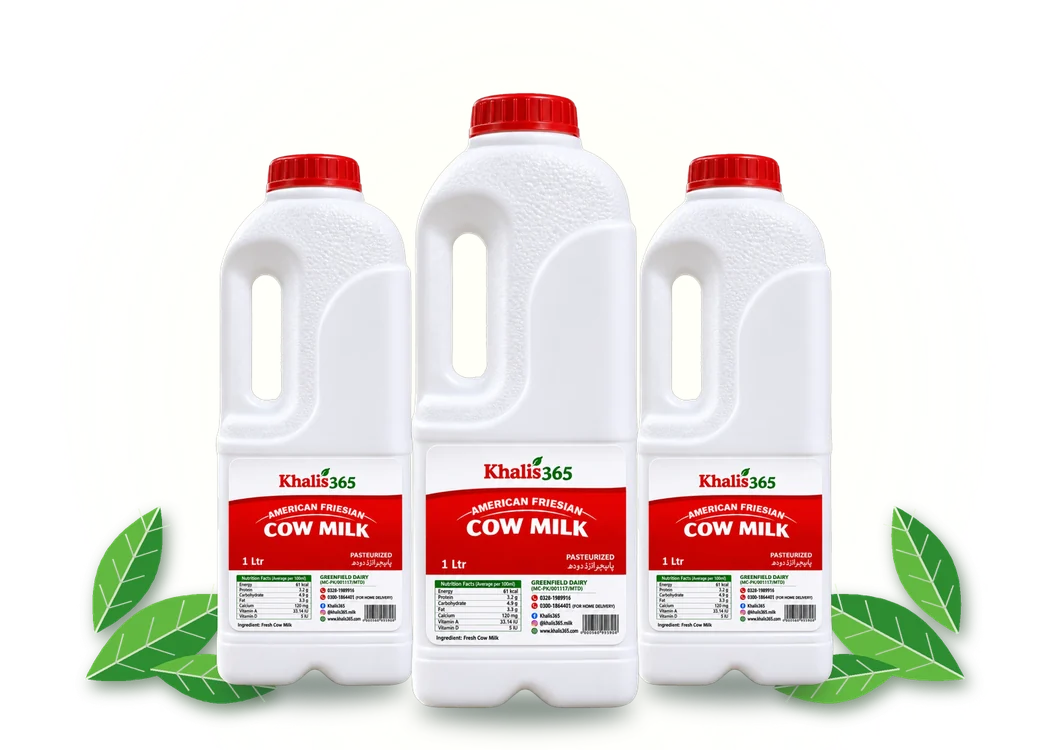
- Consistency: the label on every Khalis 365 bottle shows its nutrition per 100ml – 3.2g protein, 3.3g fat and 120mg calcium.
How to check the milk you buy
- Ask where the milk comes from – a named farm is a good sign.
- Look for a sealed pack with a manufacturing and expiry date.
- Keep milk refrigerated and use it within the date on the pack.
Bottle or pouch?
Both contain the same pure milk. The 1 litre bottle (Rs 300) is resealable with an easy-grip handle, ideal for the fridge door. The 1 litre pouch (Rs 240) is the economical choice for daily tea and cooking. Prefer milk straight from the farm? Try our raw cow milk (Rs 220).

